The ruling is from last week, but still worth mentioning as there seems to be some confusion and swirl about the scope and impact of the ruling. As always, I'm happy to provide my opinion on the subject :)
The short version is this: someone incorporated some very liberally licensed source code into a commercial product, and did not abide by the terms under which the original source code was released - namely that if you use the code, you must provide attribution and a link/pointer back to the original. So the owner of the original source code sued.
The questions that got answered by the courts were:
- Is an extremely liberal license the equivalent of depositing your work in the public domain? (no)
- Is an open source license a valid copyright, or does it fall into the jurisdiction of contract law? (copyright)
Basically, it means that the copyright holder has the right to impose restrictions on the use of licensed products.
Although some folks have noted that this could fuel further RIAA/content license nonsense, it should be noted that this ruling did NOT touch on fair use (the right of the individual to manage his/her "copy"), but on the rights of re-use and re-distribution.
And although it was a "win" for open source advocates - especially because copyright law provides the opporunity injunctive relief ("the right to withold") - it didn't address the so-called viral nature of GPL-like licenses, either.
Still, all-in-all, seems like a win for rationality - read it for yourself (its not long).
August 19, 2008


July 17, 2008
True Story
Until Facebook, I never realized how annoying something as mundane as my birthday could be. Thank you social networking overlords.
June 15, 2008
R.I.P: Finder/Explorer AKA "the Desktop", 1984-2007
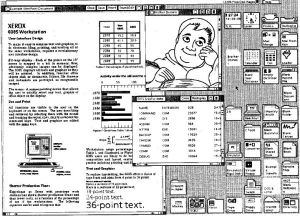 I'm calling it - time of death: June 2007. Its been a long time coming, but it seems clear that the Blackberry, the iPhone, Outlook, Picasa, and iTunes all herald the end of document-centric computing.
The iPhone really didn't create this trend, but I'll say that its certainly a very visible final nail, just as the Macintosh Finder was the "visible" start back in 1984. Today, you don't keep piles of stuff on your "desktop" and activate applications (or applets) against relevant document parts: the vast majority your content is organized against your applications, not the other way around - the iPhone is a computer that doesn't even have a desktop, in any traditional sense.
There was a brief resurgence of the idea that the document was the gateway to your applications in the early 90's with OpenDoc and OLE (Object Linking and Embedding).
Hah.
We're at the starting tip of an orgasmic diarrhea of content creation in the form of e-mail, blog posts, music, photos and videos. And every single one of those is organized against single media form computing - barely a compound document in sight... you go to custom applications to create, edit, organize, and consume all the vast amount of gigabytes and terabytes of data we all share.
Vista Search and Spotlight in OS X only demonstrate even further how increasingly irrelevant the Finder and Windows Explorer are for everyday users.
In a slightly related tangent: What's most shocking to me today is how right Unix got it in the 1970's. URL's and hierarchical file paths seemed like dinosaur concepts in the early 90's before roaring back.
Either that, or we just haven't had the imagination to organize our way out of a paper bag since 1977... there's a parallel here.
Another way of saying "cool idea - wrong problem".
May 28, 2008
1 year at Comcast
I just completed my first year at Comcast. Its been a gratifying experience thus far, both personally and professionally. I've been having a blast living in downtown Philly - the lifestyle has been wonderful, and the 10 minute walk to work everyday has completely spoiled me for commuting in the future. And Comcast has been a great place to work: an interesting and challenging set of problems, and a good group of people to work with (and for). I'd be lying if I said it was moving as quickly as I'd like - although I think I've made some meaningful contributions throughout my time thus far, the bigger consumer impacting things I've been working on (tru2way and Project Infinity and the like) will only begin showing up in the back half of '08 and only really at significant scale and volume (from a consumption perspective) well into 2009.
That's a long time.
Still, its a complicated technology environment - its a heady mix of legacy technology infrastructures, permutations of configurations and network designs, and a significant scale of problem set and quality-of-service requirements - and just to help, we enjoy a... challenging regulatory environment. (Boy, Those sound like excuses, even as I type them)
In celebration of my year (sort of) I spent last week at NCTA's (National Cable and Telecommunications Association) "The Cable Show". I spoke on a number of panels at the show, which is always fun. The Q&A's are always a bit frustrating, as people come to the shows to get answers, which I have .... but usually can't give. We have enough problems internally distinguishing between *goals* ("we're committed to getting there") and *plans* ("we actually have a path to get there") - no good way to make that distinction clear externally - especially for a public company.
The only real drag has been my travel calendar - would like to slow that down a bit. All in all, though, feels like I'm just getting warmed up here, which is both exciting and depressing, on many levels :)
March 6, 2008
Apple: "Who needs Flash?"
Ouch - from the grand poobah, Steve Jobs: "version of Flash formatted to personal computers is too slow on the iPhone"
Adobe's response notes the difference between "Flash lite" (for mobile) and "Flash" (the desktop version Jobs alluded to in his comments).
From a technology perspective, this hilights a subtlety Jobs implies that most (including Adobe's Ryan Stewart) either missed or mis-directed in their responses: Jobs doesn't want the half-assed version of the Web that most users experience on their handsets - he wants the real thing.
And that means, for the iPhone, Flash, not Flash Lite. The point being, the iPhone is a general purose computing device, and, though it may require interaction paradigm adjustments (form factor, input schema, etc.), it shouldn't have to compromise richness and robustness.
The current Flash Player really is optimized for the desktop (especially the Intel platform)- but, to be fair, that's an engineering deficiency, not a phyics problem; it is possible for the Flash platform to address...
February 25, 2008
Adobe: Engage and AIR
I'm at the Adobe Engage event is SF today, for the launch of Adobe AIR. Its been a while coming (beginning with Adobe Apollo), with much written about it.
Interesting elements: desktop integration (peristent storage, UI touchpoints, etc.), full HTML(via WebKit) support, integrated PDF display, and an application packaging model for easy install and update (distribution).
The two most important pieces (IMHO) are the persistent storage model and application packaging model - these start to bring the benefits of "content" to executable applications... that its "Flash" underneath is interesting but not necessarily the important part. These technologies do provide a differentiated but overlapping feature set that I don't mean to downplay, but HTML, Flash, PDF, etc. are, I think, going to end up being more about onboarding developers.
Hard to appreciate how important distribution is as a part of application lifecycle management.
The natural comparison points are Silverlight and Prism, and as with those two, distribution will be less the issue than finding the compelling applications will be (although you should note that Silverlight, in particular, is more an answer to Flash than AIR).
Adobe is significantly advantaged in this regard because (a) they're cross-platform (by that I mean crossing OS, browser and Web/Desktop boundaries), and (b) they're committed to the platform - the biggest knock with Microsoft and the Mozilla Foundation is that its hard to tell how serious they really are. Remember when all of Vista was going to *require* .NET? Or remember ChromeEffects? Or Blackbird?
That said, I think one chink in the AIR platform (IMHO) is that it provides no way for third parties to natively extend the platform - Adobe still thinks about applications as B2C propositions. A second knock is that they still haven't gotten the "just in time" element of application and platform install quite right (I've written on this before) - it will limit (again IMHO) where users prefer websites to applications.
Still - there's a lot to like.
More shortly - Kevin Lynch is talking now...
Subscribe to:
Posts (Atom)