Pages

September 19, 2008

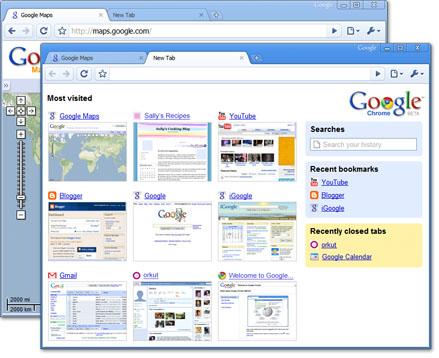
Google Chrome Review in 25 words

Pros: Great UI (not break-through, but very nice), Fast
Cons: Memory hog, Crashes a lot, not quite as compatible
Summary: Its my default browser - go figure!
September 2, 2008

Google Chrome: Quick Browser Benchmark

Update: IE 7 was not included because it took too damn long to finish and I got bored.

Using Dromaeo.

Firefox 3_____2042 ms
Safari 3.1.2__2561 ms
Chrome 0.2:____540 ms

Actual product thoughts forthcoming after a few days of usage... but my "first 10 minutes" review is: nice, but nothing that would make me switch (from Firefox).

September 1, 2008

New Browser: Google Chrome -
Launching Tomorrow! (maybe?)

Update: Official statement.

Lots of information available at blogoscoped. Of particular interest is how it looks like its going to be introduced: using an online graphic novel by Scout McCloud.

The new JavaScript VM should be interesting - I've certainly felt you could achieve 5-10X current JavaScript without resorting to a JIT for dynamic languages. Too much is made of the process isolation (IMHO) - though there is something nice in the idea that each tab is a "reboot" of your browser.

They also outline some UI design choices which I think are appropriate - we did them quite intentionally on AOL Explorer, and (forgive the sense of vindication but) two items I feel particularly that I pushed (larger back button and tabs above the address bar) look like they're mainstreaming... pity we blinked so often back then.

Hopefully there will be more in "Google Chrome" - a rethought browser is looooong over due. Definitely read Scott's comic commentary as to why.

Probably unfair to juedge without a test drive, but what I see in screenshots is still pretty incremental (as was AOL Explorer) - it would be a continued sign of corporate hubris to imagine success by tweaking a successful formula and sticking their brand on it.

(Note that I'm not saying it won't work.... :P)

I'll post some thoughts when I try it out.

August 19, 2008

Open Source Legal Ruling Sets Precedent

The ruling is from last week, but still worth mentioning as there seems to be some confusion and swirl about the scope and impact of the ruling. As always, I'm happy to provide my opinion on the subject :)

The short version is this: someone incorporated some very liberally licensed source code into a commercial product, and did not abide by the terms under which the original source code was released - namely that if you use the code, you must provide attribution and a link/pointer back to the original. So the owner of the original source code sued.

The questions that got answered by the courts were:
- Is an extremely liberal license the equivalent of depositing your work in the public domain? (no)
- Is an open source license a valid copyright, or does it fall into the jurisdiction of contract law? (copyright)

Basically, it means that the copyright holder has the right to impose restrictions on the use of licensed products.

Although some folks have noted that this could fuel further RIAA/content license nonsense, it should be noted that this ruling did NOT touch on fair use (the right of the individual to manage his/her "copy"), but on the rights of re-use and re-distribution.

And although it was a "win" for open source advocates - especially because copyright law provides the opporunity injunctive relief ("the right to withold") - it didn't address the so-called viral nature of GPL-like licenses, either.

Still, all-in-all, seems like a win for rationality - read it for yourself (its not long).

July 17, 2008

True Story

Until Facebook, I never realized how annoying something as mundane as my birthday could be. Thank you social networking overlords.

June 15, 2008

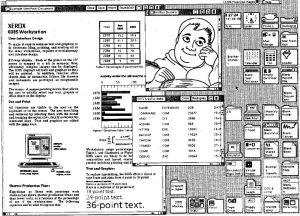
R.I.P: Finder/Explorer AKA "the Desktop", 1984-2007

I'm calling it - time of death: June 2007. Its been a long time coming, but it seems clear that the Blackberry, the iPhone, Outlook, Picasa, and iTunes all herald the end of document-centric computing.

The iPhone really didn't create this trend, but I'll say that its certainly a very visible final nail, just as the
Macintosh Finder was the "visible" start back in 1984. Today, you don't keep piles of stuff on your "desktop" and activate applications (or applets) against relevant document parts: the vast majority your content is organized against your applications, not the other way around - the iPhone is a computer that doesn't even have a desktop, in any traditional sense.

There was a brief resurgence of the idea that the document was the gateway to your applications in the early 90's with
OpenDoc and OLE (Object Linking and Embedding).

Hah.

We're at the starting tip of an orgasmic diarrhea of content creation in the form of e-mail, blog posts, music, photos and videos. And every single one of those is organized against single media form computing - barely a compound document in sight... you go to custom applications to create, edit, organize, and consume all the vast amount of gigabytes and terabytes of data we all share.

Vista Search and Spotlight in OS X only demonstrate even further how increasingly irrelevant the Finder and Windows Explorer are for everyday users.

In a slightly related tangent: What's most shocking to me today is how right Unix got it in the 1970's. URL's and hierarchical file paths seemed like dinosaur concepts in the early 90's before roaring back.

Either that, or we just haven't had the imagination to organize our way out of a paper bag since 1977... there's a parallel here.

Another way of saying "
cool idea - wrong problem".